Last updated: July 29, 2025
“I’m too old for that.” We hear this in the studio regularly — usually from people between 50 and 70 who actually know that movement would do them good. The good news: research says clearly the opposite. Muscles still respond to training stimuli at 60 or 70. What changes isn’t the ability to build strength — it’s how wisely you start.
What actually happens in the body after 50
Starting around age 30, people lose muscle mass continuously without targeted training. The process is slow and unnoticed at first, but accelerates noticeably after about 50. The tricky part: you don’t see it in the mirror at first. You notice it in daily life. Shopping bags feel heavier. Standing up from a chair suddenly requires momentum. Stairs become a challenge.
At the same time, bone density decreases, and balance becomes less stable. These three issues are connected — and all three can be influenced by the same measure: strength training. Not walking, not cycling exclusively. Muscles need resistance to stay strong.
What official guidelines say
The World Health Organization recommends adults do 150 to 300 minutes of moderate physical activity per week, plus strength training for all major muscle groups on at least two days.[1] For people over 65, there’s an additional recommendation often overlooked: strength and balance training on three or more days per week, explicitly for fall prevention.
Swiss movement guidelines follow the same direction.[2] Notably, what they don’t state is an upper age limit. There is no age at which strength training becomes pointless.
The three mistakes we see most often
- Too cautious. Many train for years with weights that no longer stimulate. Muscles only grow when challenged — controlled, but demanding. A weight that makes the last two repetitions truly hard is correct.
- Only endurance. Hiking and cycling are great for heart and circulation, but they don’t maintain muscle. Those who do only endurance lose strength over time.
- Waiting for the perfect moment. After hip surgery, after moving, after holidays. That moment never comes. Starting is possible in almost any life phase — it just looks different.
How a meaningful start looks
Two sessions per week are enough to begin with. The first weeks are about technique, not load — guided machines help you learn movement patterns more securely than free weights. Focus on big muscle groups: legs, back, chest, core. Bicep isolation is nice, but it doesn’t help you stand up from a chair.
What we especially recommend to beginners in this age group: get properly introduced. Not because it’s complicated, but because proper form from day one makes the difference between “feels good” and “hurts.” If you have a history of knee, back, or shoulder issues, mention it upfront — adjustments will be made, not avoided.
What you can realistically expect
Strength gains typically appear after three to four weeks, as the body first learns to better activate existing muscle fibers. Visible and noticeable improvements in daily life — more stable on your feet, less back pain when sitting, more endurance on hikes — usually take two to three months.
What surprises many: the biggest gain is rarely visual. It’s the natural ease with which everyday tasks work again.
Frequently asked questions
Is strength training at 65 dangerous?
With clean technique and properly adjusted load, it’s one of the safest forms of exercise — and it objectively reduces fall risk. In fact, inaction and muscle loss are more dangerous.
I’ve had a herniated disc. Can I still train?
In most cases, yes — and often especially beneficial — but not on your own. Mention it during your introduction, and get it medically checked if you have acute symptoms.
How long does a session take?
45 to 60 minutes including warm-up. More isn’t better at the start.
Where you can start
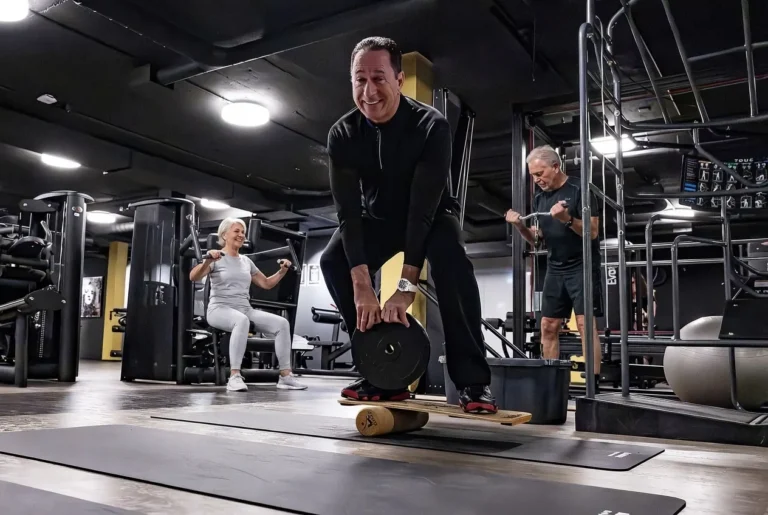
At laSuite on Zürichstrasse 33 in Lucerne, people train from their early twenties all the way into their seventies — often side by side on the same equipment. The studio is open 24/7, which makes a real difference for people with irregular schedules, or anyone who prefers quieter off-peak times. Get a feel for the place at The Studio, and see pricing at Prices.
If you’re unsure whether and how to start: contact us via Contact. We’ll look at your situation together.
About the author
The laSuite Fitnessclub team, Lucerne. We support beginners, returners, and dedicated athletes at Zürichstrasse 33 — 24/7, 365 days a year. Strength training, prevention, and physiotherapy under one roof. Questions? Write to us.
Sources
- World Health Organization: Physical activity – Fact sheet (including strength and balance training for those over 65).
- Federal Office of Sports BASPO / Network HEPA Switzerland: Movement recommendations for Switzerland.
Note: This article provides general information and does not replace individual medical advice. If you have existing symptoms or pre-existing conditions, please get medical clearance before starting training.
Book Your Trial Session
Come by and experience LaSuite – no commitment, fully guided.
Book Trial Session