Last updated: 19 August 2025
Your back hurts, and the first reaction is usually to rest. Lie down, wait, don’t lift anything heavy. That’s correct for acute injuries. But for the vast majority of back issues—those without a clear structural cause—it’s one of the most persistent myths we see at the studio.
Why Rest Often Makes the Problem Worse
Muscles that aren’t used start to weaken. With the back, this happens quickly: just a few days of reduced activity weaken the deep core muscles that stabilize the spine. Less stability means more load on passive structures—and often, new pain. The more cautious you become, the further the spiral turns.
Professional medical societies have recommended for years that people with nonspecific back pain stay active as early as possible instead of resting in bed.[1] This doesn’t mean “push through with gritted teeth and keep doing what you did before.” It means applying targeted, controlled loads—rather than avoiding movement altogether.
What a Strong Back Really Needs
A common misunderstanding: “Back training” doesn’t mean training only the back. The spine is stabilized by a coordinated effort—abdominals, back, glutes, and hamstrings all work together. Strengthening only the back extensors creates imbalance—it builds one side, leaves the other weak.
Three areas are essential:
- Core stability. The deep muscles that stabilize your spine before movement even begins. They’re trained less by movement and more by holding positions against resistance.
- Strong legs and glutes. Lifting from your legs instead of your back reduces strain on the spine during every daily movement. This isn’t just about technique—this requires strength.
- Mobility in hips and thoracic spine. Stiffness in these areas forces the lower back to compensate. It wasn’t built for that.
The Office Job as a Hidden Main Factor
Eight hours of sitting aren’t a true load for the back—they’re the opposite: monotone inactivity. Muscles get no stimulus, discs aren’t nourished through change of load, and hip flexors shorten.
Working out two to three times a week helps compensate surprisingly well. Even better when combined with movement breaks during the day—stand up, walk a few steps, change your position. Those who combine both often notice a difference in lower back tightness within just a few weeks.
How to Get Started When Back Issues Are Already Present
Here, guidance isn’t a luxury—it’s the key factor. A sensible approach follows this order:
- Clarify what’s going on. If you have radiating pain, numbness, or weakness in the leg, see a doctor first—not the studio.
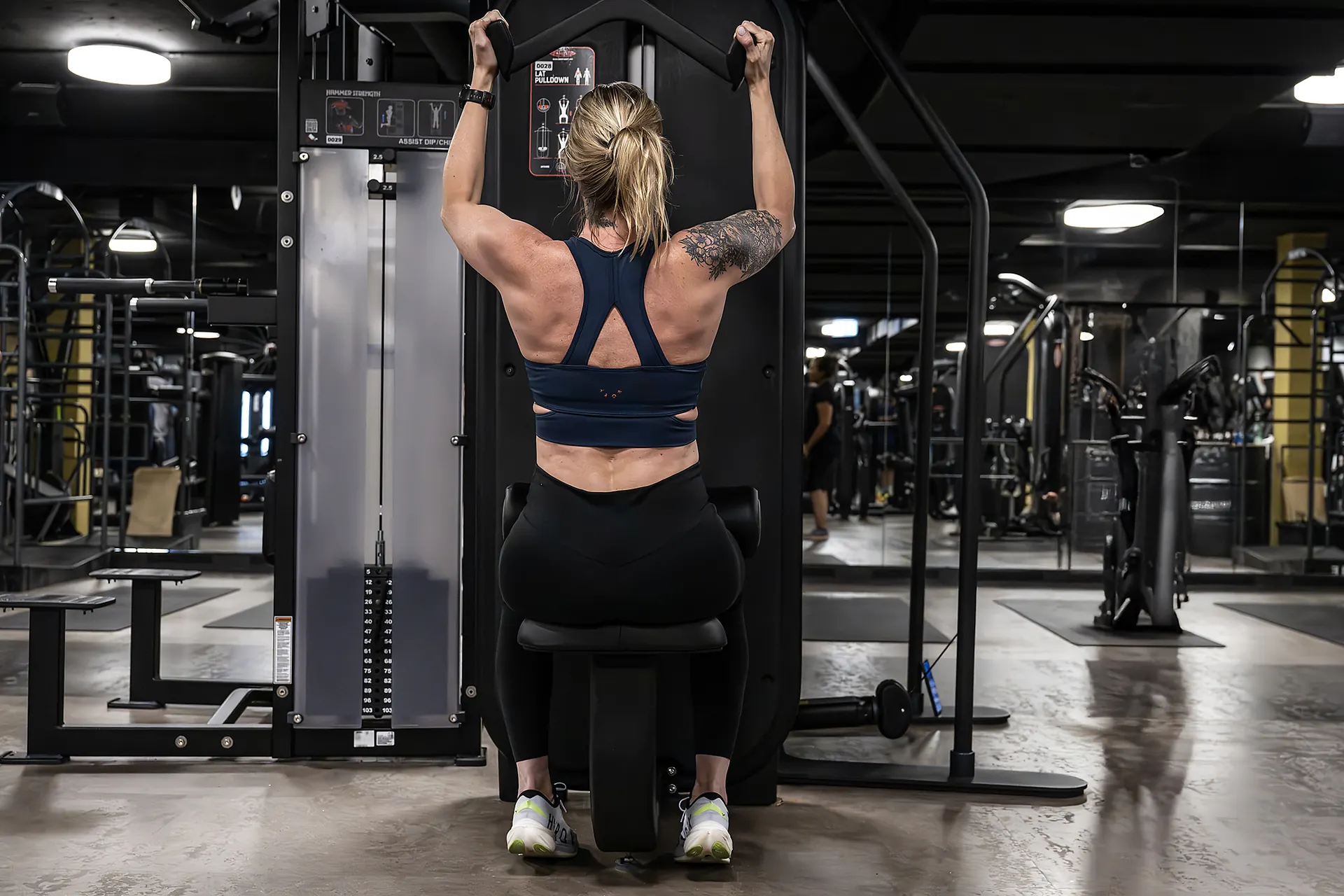
- Technique before weight. The first weeks are about learning clean movement patterns. Guided machines are helpful here because they dictate the motion.
- Progress slowly and consistently. Small, steady steps—regular training matters more than big jumps. Back muscles respond well to consistency, poorly to extremes.
- Keep going, even when it feels better. The most common relapse happens after four pain-free weeks—people stop.
If you’re already in physiotherapy, benefits triple when therapy and training happen at the same location. Then both work in the same direction, not side by side.
Frequently Asked Questions
Should I train if I have back pain?
Most often yes—with adjustments. For acute, severe, or radiating pain, get a medical check-up first.
Is deadlift bad for the back?
No—poorly executed deadlifts are. The movement itself is one of the best exercises for the posterior chain when learned correctly.
How long until I feel better?
Many report noticeable improvement within four to six weeks. Not a promise—back pain has many causes—but a realistic expectation based on experience.
Training and Therapy Under One Roof
At laSuite in Lucerne, you get both under the same roof: strength training on modern equipment and physiotherapy. For anyone where back issues are already a concern, this cuts down the path significantly—what’s worked on in therapy can be immediately carried over into training.
A common follow-up question from practice: how long does it take for tight muscles to return to normal? See what the studio looks like at The Studio. If you’re starting from age 50, our guide Strength Training Over 50 is helpful too. Rates: Prices. Questions about your situation? Contact us.
About the author
The team at laSuite Fitnessclub, Lucerne. We support beginners, returners, and dedicated athletes at Zürichstrasse 33—24/7, 365 days a year. Strength training, prevention, and physiotherapy under one roof. Questions? Write to us.
Sources
- Rheumaliga Schweiz: Information on back pain and movement (Movement over bed rest for nonspecific back pain).
- Federal Office of Sport BASPO / HEPA Switzerland Network: Movement recommendations for Switzerland.
Note: This article provides general information and does not replace medical or physiotherapeutic diagnosis. If you have acute, severe, or radiating back pain, numbness, or weakness, consult a doctor first.
Book Your Trial Session
Come by and experience LaSuite – no commitment, fully guided.
Book Trial Session